|
|
ROD GYMNOCALYCIUM
PODROD V. -
MUSCOSEMINEUM Schütz
Gymnocalycium megatae Y. Ito
Explanatory Diagram 175, 1957
Většinou jednotlivé, terčovité, 4 – 6 cm vysoké a 10 – 20 cm v průměru, světle zelené. Žebra 9 – 13, ostrohranná, složená z hranatých kuželovitých hrbolců.
Okrajové trny až 5, jehlovité, tenké, asi 2 cm dlouhé, všechny zpočátku hnědé až černošedé, se žlutozelenou základnou, později všechny světle šedé.
Květ nálevkovitý, asi 5 cm dlouhý a stejně tak široký; trubka zúžená a holá, namodralá; vnitřní okvětní lístky bílé, vnější se světle zeleným středním páskem. Nitky tyčinek bílé, prašníky tmavě žluté. Čnělka a blizna s bílým nádechem.
Domovina: Paraguay.
Taxon nalezl jako první Adolfo Maria Friedrich žijící v Asuncionu při svých cestách po paraguayském Chacu v době paraguaysko-bolivijské války v letech 1933 – 1935, kdy zde byl zaměstnán jako válečný zpravodaj. Rostliny pak měl zasazené na své zahradě v Asuncionu. Po válce pak koupili všechny rostliny od A.M.Friedricha Hyrry Blossfeld a Oreste Marsoner, kteří je pak dále rozšířili ve svých nabídkách. Zde také vzniklo jméno Gymn. tortuga, protože rostliny byly těsně přitisknuté k půdě a připomínaly želvy. S výsevy měl úspěch Zdeněk Fleischer a poté je pěstoval i Jan Šuba starší v Týnečku u Olomouce. Někde v těchto pěstírnách pak vznikla jména Gymn. karwinskianum, Gymn. rotundicarpum a Gymn. piricarpum. Ferdinand Plesník z Olomouce pak popsal Gymn. karwinskianum jako Gymn. fričianum v německém časopisu KuaS. Backeberg označil Gymn. fričianum za Gymn. marsonerii. To však není správné, Gymn. fričianum je Gymn. megatae. Všelijaké názvy se ze sbírek pomalu vytratily, ale Gymn. tortuga lze stále spatřit, jde o poněkud odlišnou formu Gymn. megatae.
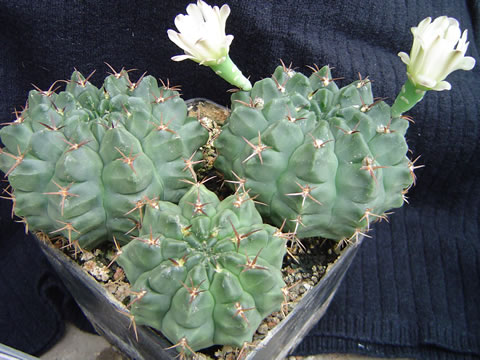
Gymnocalycium tortuga
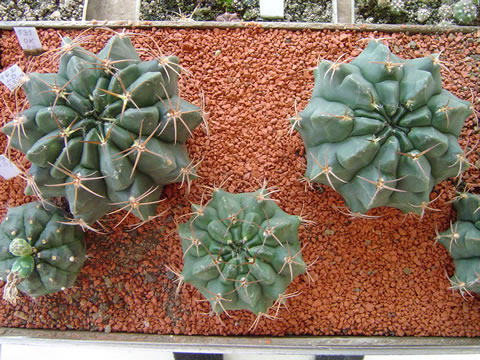
Gymnocalycium megatae
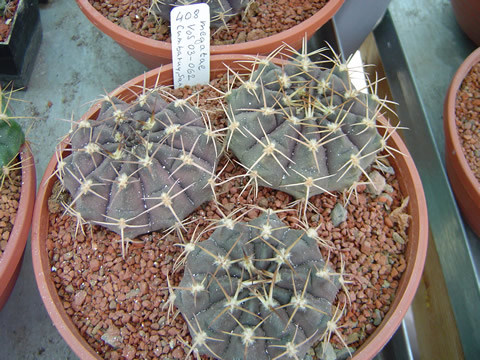
Gymnocalycium megatae jedna z forem Uplynulo mnoho let a k dalším pozorováním na nalezištích došlo opět až roku 1964, kdy novou sběratelsou činnost A.M. Friedricha inicioval rakouský gymnofil Günther Moser z Kufsteinu. A.M. Friedrich poslal rostliny, které pak měl G. Moser ve své sbírce pod svými sběralelskými značkami GM, např. Gymn. megatae GM 413. Poté vegetaci v Paraguayi studoval dr. Esser v blízkosti menonitské osady Filadelfia a u osady Fortin General Garay. Rostliny jsou tmavě zelené až černozelené, někdy tvoří vícehlavé skupiny. Rostou ve velmi drsných podmínkách za velkého vedra, vystaveny plnému slunečnímu žáru. Koření mělce a daleko, podle toho by také mělo vypadat pěstování v kultuře. Květy jsou bílé až růžové a jedinci dosahují až 25 cm v průměru. Importy dovezené v té době neměly dlouhého trvání a již je nikde nespatříme. Japonský botanik Y. Ito popsal ještě Gymn. tudae a Gymn. onychacanthum, mají se lišit větším počtem trnů v areole, ale jde jen o formy Gymn. megatae.
Rostliny pěstujeme již od malých semenáčků v širokých a mělkých nádobách, pokud chceme využít prostor, zasadíme raději pět rostlinek do jedné ploché misky, aby rostliny mohly široce kořenit. Zaléváme výhradně dešťovou vodou, pokud je chladno raději vůbec. Pravokořenné rostliny nesnáší poklesy teplot pod 10°C, je však lépe nenechat poklesnout teplotu pod 15°C. Velké a pravokořenné rostliny ve sbírce jsou znakem vrcholného umění pěstitele a dobrých podmínek, takových rostlin je však vidět poskrovnu. Takové velké a ploché exempláře měli p. Zdeněk Kluka ve Šternberku a p. Josef Kohout v Hradci Králové. Někteří pěstitelé raději rostliny roubují. Vhodný je skleník, do pařeniště se nehodí. Červené plody vydrží na rostlinách dva až tři roky.
Další nálezy hlášeny WO 82 Boqueron (= Wilhelm Knoll), LB 2239 Fortin Corrales en Gran Siete (Ludwig Bercht), AA 129 Filadelfia (Arzberger). Ludwig Bercht tak označuje LB 2358 Boyuibe v Bolívii, ale nálezy z těchto končin označují jiní sběratelé již jako Gymn. tudae.
Gymnocalycium megatae var. che-guevarai Milt
Cactaceae etc. (Slovensko), 2016/3, str. 114 – 118.
Stonek jednotlivý, 5 – 14 cm v průměru, 4 – 8 cm vysoký, zploštěle kulovitý, s prohloubeným temenem, temeno hned zpočátku vytrněné, jedinci ve stáří odnožující, stonky zelené až tmavozelené, někdy s šedým nádechem, na slunci s mírně fialovým nádechem. Kořeny vlásčité. Žebra 10 – 14 v počtu, přímo svisle probíhající, u temene 5 mm široká, u základny stonku až 2 cm široká, pouze s nízkými bradovitými výčnělky, na jejichž vrcholech jsou vsazeny areoly, nad areolami těsně jen nepatrné mělké zářezy. Svislé zářezy mezi žebry rovné, před základnou stonku splývající s tělem a již nepatrné.
Areoly kulaté až pouze mírně oválné, 2 – 3 mm v průměru, s nažloutle bílou plstí, která v kultuře dlouho přetrvává, v přírodě a při zalévání shora areoly brzy lysé, ale nešednoucí. Trny okrajové paprskovitě rozprostřené, odstávající, v počtu 9 – 11, z toho 1 nejdelší směřující dolů, až 2 cm dlouhý, další boční vždy 3 na levou stranu směřující a 3 na pravou stranu směřující, asi 1 až 1,5 cm dlouhé, k tomu dva až tři trny nahoru směřující, kratší a slabší než ostatní okrajové. Všechny okrajové trny slámově bílé až slámově nažloutlé, někdy s hnědými špičkami, málo šednoucí, v kultuře nešednoucí, rovné. Střední trn 0 až 1, rovný, mírně nahoru směřující, délka 1 – 1,5 cm, tmavšího odstínu než trny okrajové, a mnohdy s kaštanově hnědým odstínem, všechny trny jehlovité.
Poupata silná, velmi sukulentní, zelená, šupiny s bělavými okraji a karmínově červenými špičkami, kulatá v horní části. Květ 4 – 5,5 cm vysoký, při anthesi asi 4 cm široký, bílý, velmi silně sukulentní. Trubka asi 2 cm dlouhá, postupně se rozšiřující, na základně asi 5 mm v průměru, pak až 8 – 9 mm v průměru. Trubka zevně světlezelená, s 9 – 15 šupinami o rozměrech šířka 2 – 3 mm, výška 1,5 – 2 mm, šupiny s nazelenalou základnou, velmi širokým bílým okrajem a růžovou skvrnou pod vrcholem šupin. Ovarium bílé, 1,8 cm vysoké, 0,8 mm široké. Stěny ovaria 2 – 3 mm silné, (smaragdově -) zelené v řezu. Receptakulum kulaté, 0,9 – 1,4 cm široké, nahoru se zužující, bílé, stěny receptakula velmi silné, bílé. Vnější okvětní lístky: šupiny nad trubkou plynule přecházejí do silně sukulentních okvětních lístků, které jsou nejprve zevně olivově zelené s bíle lemovanými okraji a růžovými špičkami, až 1,5 cm dlouhé, 3-5 mm široké, velmi tlusté, málo se rozšiřující k vrcholu, velmi široce kopinaté až u vrcholu. Vnitřní okvětní lístky čistě bílé až mléčně bílé, kopinaté, 1,5 -1,9 cm dlouhé a 0,3-0,5 cm široké. Blizna velmi krátká a silná, jen 3 – 5 mm vysoká, bílá, dosahující jen 3/5 výšky receptakula. Prašníky šedé, v několika sériích, naklánějící se dovniř květu a nad bliznu, kterou výrazně přesahují.
Holotyp: typová rostlina uložena v herbáři Vlastivědného muzea v Olomouci pod číslem B 171481, typová kultura pod označením 300Stri ve sbírce Ivan Milt, původní sběry Unger 1991.
Ikonotyp: Obr. 1.
Semena podrod Muscosemineum. Domovina: Paraguay, Cerro León. Nr.2269/1991Unger
Etymologie: pojmenováno po neúnavném bojovníkovi za lidská práva Ernesto Che-Guevaraovi, původně vystudoval lékařství, nar. * 14.6.1928 v Argentině, + zavražděn u La Higuera v Bolívii 9.10.1967.
Liší se od typu druhu Gymnocalycium megatae mnohem jemnějším a slabším odstávajícím otrněním, také zbarvením tohoto otrnění, tvorbou otrnění již od počátku v prohlubni temene, a velmi izolovaným místem výskytu.
Jedince tohoto taxonu pozoruji mnoho let ve sbírce a zpočátku jsem uvažoval o popisu jakožto nového druhu, protože lze pozorovat i závažné rozdíly v květech oproti Gymnocalycium megatae. Přípomíná mi tento taxon vlastně přechodný typ mezi Gymnocalycium megatae a Gymnocalycium anisitsii. Dalším rozdílem je bezprostřední vytrňování prolákliny temene, což u jiných příbuzných nelze pozorovat. Jedinci tohoto taxonu jsou v kultuře velmi choulostiví a ani roubování nepřináší přesvědčivé výsledky.
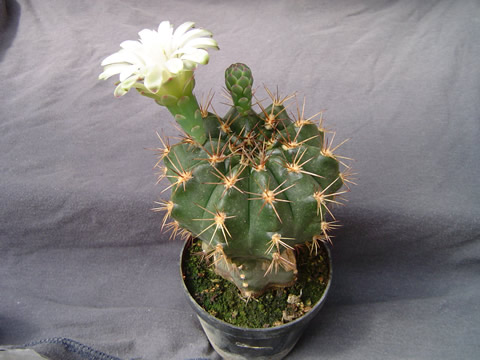
Gymnocalycium megatae var. che-guevarai
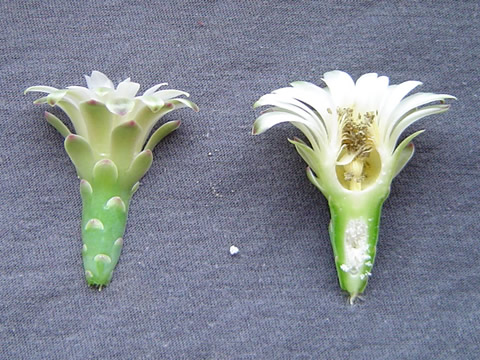
Gymnocalycium megatae var che-guevarai řez květem
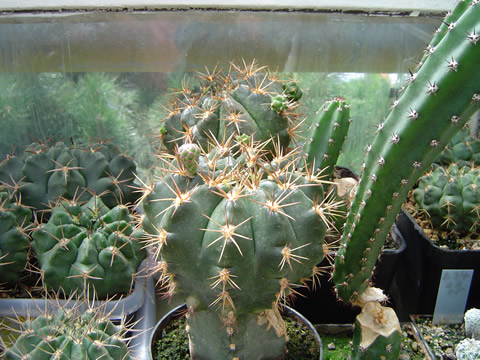
Gymnocalycium megatae var che-guevarai s mladými poupaty
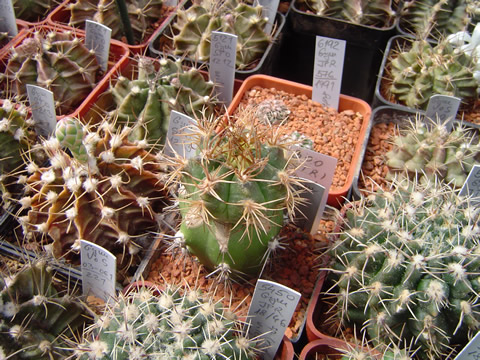
Gymnocalycium megatae var che-guevarai silně vytrněný jedinec

Che-Guevara (vlevo) v revoluční diskuzi s přáteli ve zbrani

zraněný bojovník za lidská práva Che-Guevara a to se po něm nejmenuje letiště Gymn. megatae ssp. zecheri Amerh.
Gymnocalycium (Rakousko), 23 (č.4) 2010, str. 959-968.
Má se lišit od Gymn. megatae silným odnožováním tvořených skupin s až 20 hlavami. Jednotlivé hlavy mají 15 – 18 cm v průměru, 11 – 15 ostrých žeber, epidernis fialově hnědá, a světle šedými, přímými, silnými a nejčastěji odstávajícími trny, které jsou 10 – 15 mm dlouhé. Domovina: Paraguay, provincie Boqueron, Colonia Neuland, 185 m n.m. Byl uveřejněn jediný obrázek, připomínající Gymn. hamatum.
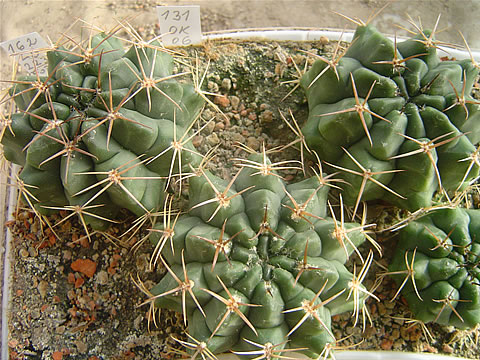
Gymn. megatae LB 2239 Fortin Corrales
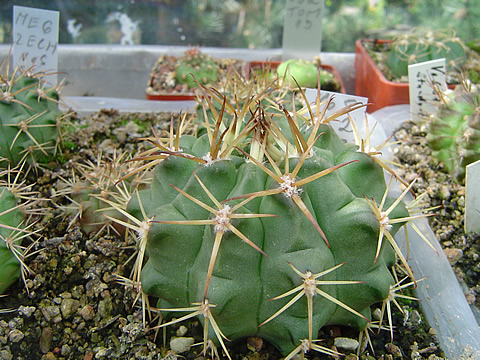
Gymnocalycium megatae ssp zecheri VoS 562 východně od Blumental, Alto Paraguay
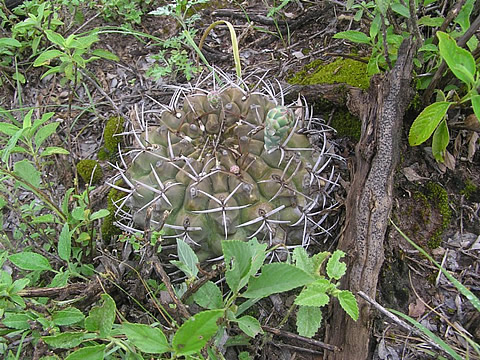
Gymn. megatae RF 304 San Pedro - Villa Guasayan - foto Rudolf Frélich
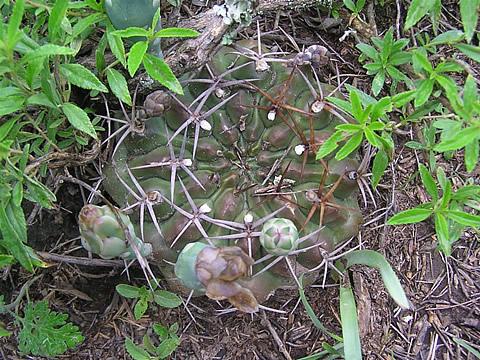
Gymn. megatae RF 304 San Pedro - Villa Guasayan - foto Rudolf Frélich Gymn. megatae – summary:
Adolfo Maria Friedrich had been living in Asuncion found the taxon as the first on his trips through the paraguayan Chaco at the time of the paraguayan-bolovian war in the years 1933 – 1935 when he was employed here as the war writer. Then he has grown the plants in his garden in Asuncion. Harry Blossfeld and Oreste Marsoner have bought all plants from A.M. Friedrich after the war and they have sold them in their lists. The name Gymn. tortuga had also come into existence here bacause the plants had been pressed to the soil and they had resembled a tortoise. Mr. Zdeněk Fleischer had been succesful in sowing and then Mr. Jan Šuba in Týneček near Olomouc had grown them. Then the names as Gymn. karwinskianum, Gymn. rotundicarpum and Gymn. piricarpum had come into existence somewhere in those nurseries. Ferdinand Plesník had described later Gymn. karwinskianum as Gymn. fričianum in the German journal KuaS. Backeberg has marked Gymn. fričianum like Gymn. marsonerii. However, it is not right, Gymn. fričianum is Gymn. megatae. Various names have slowly lost from the collections but it is still possible to see Gymn. tortuga, it is rather different form of Gymn. megatae.
It had lasted many years and another searching and observing on the finding places started again only in 1964 when the Austrian gymnofil Günther Moser from Kufstein initiated new collecting work of A.M. Friedrich. He has sent the plants which Moser had in his collection with his collection numbers, for example Gymn. megatae GM 413. Dr. Esser has studied the vegetation of Paraguay after Friedrich in the environment of the village Filadelfia and Fortin General Garay. The plants are dark green to blackgreen, they make sometime groups with more heads. They grow in very harsh conditions in very hot temperatures, staying on fully sun glow. They have shallow and long roots and groving in the culture ought to be after it. Flowers are white and pink and some specimens can reach to 25 cm in diameter. The imported plants had not had the long life and we can see them nowhere today. The Japanese botanist Y. Ito has described Gymn. tudae and Gymn. onychacanthum else, they should differ with higher number of spines in areole but they are only forms of Gymn. megatae.
We grow the plants since the small seedlings time in broad and shallow pots, if we want to have fully used place, we will pot better five little plants to one flat pot to be able root widely. Watering only with rain water and when it is cold it is better without water. The plants on their own roots do not like the temperatures under 10°C, however, it is better not to let the temperature under 15°C. The big plants on their own roots in the collection is the sign of the craft ability of the grower and good conditions, however, it is possible to see the plant like this rarely. The big and flat specimens had been able to see at Mr. Zdeněk Kluka in Šternberk and at Mr. Josef Kohout in Hradec Králové. Some growers better graft the plants. The greenhouse is suitable, it is not good for hotbeds. Red fruits can stay on plants two or three years.
The other finds reported: WO 82 Boqueron (Wilhelm Knoll), LB 2239 Fortin Corrales en Gran Siete (Ludwig Bercht), AA 129 Filadelfia (Arzberger). Mr. Ludwig Bercht has marked like this sort LB 2358 Boyuibe Bolivia but the finds from that territory are marked by the others already as Gymn. tudae.
|